You must be wondering that What is GEO and how it is different from SEO right! – GEO is Generative Engine Optimization, it is the strategic process of optimizing digital content to ensure it is retrieved, cited, and recommended by AI-powered answer engines like ChatGPT, Google Gemini, and Perplexity.
The Evolution of Search: Why GEO is the New SEO
The internet has moved from a “library of links” to a “conversational assistant,” making it vital to adapt your content for machine comprehension. Traditional SEO focuses on ranking your website in a list of search results to drive clicks, while GEO focuses on making your brand the “source of truth” for AI.
By 2026, over 25% of search volume has migrated from traditional engines to AI chatbots, according to recent industry reports. This means if an AI like Claude or ChatGPT doesn’t “know” your brand, you are invisible to a quarter of your potential audience. Integrating What is GEO into your marketing vocabulary is no longer optional; it is a requirement for growth.
- Traditional SEO: Focuses on keywords, backlinks, and site speed to win a high position on a page.
- Generative Engine Optimization (GEO): Focuses on “citation probability,” ensuring AI models select your data to build their narrative responses.
- The Hybrid Approach: Winning in 2026 requires a 60/40 split between maintaining technical SEO foundations and building GEO-friendly content structures.
Key Differences Between SEO and GEO
| Feature | Traditional SEO | GEO (Generative Engine Optimization) |
| Primary Goal | Clicks and traffic to your website. | Brand citations and AI recommendations. |
| Search Engine | Google, Bing, Yahoo. | ChatGPT, Gemini, Perplexity, Claude. |
| Content Unit | The entire web page or blog post. | Modular “passages” and data chunks. |
| Key Metric | Ranking position (1–10). | Share of Influence and Citation Rate. |
| User Experience | Navigating through various websites. | Receiving a single, synthesized answer. |
Understanding the 2026 AI Search Algorithm
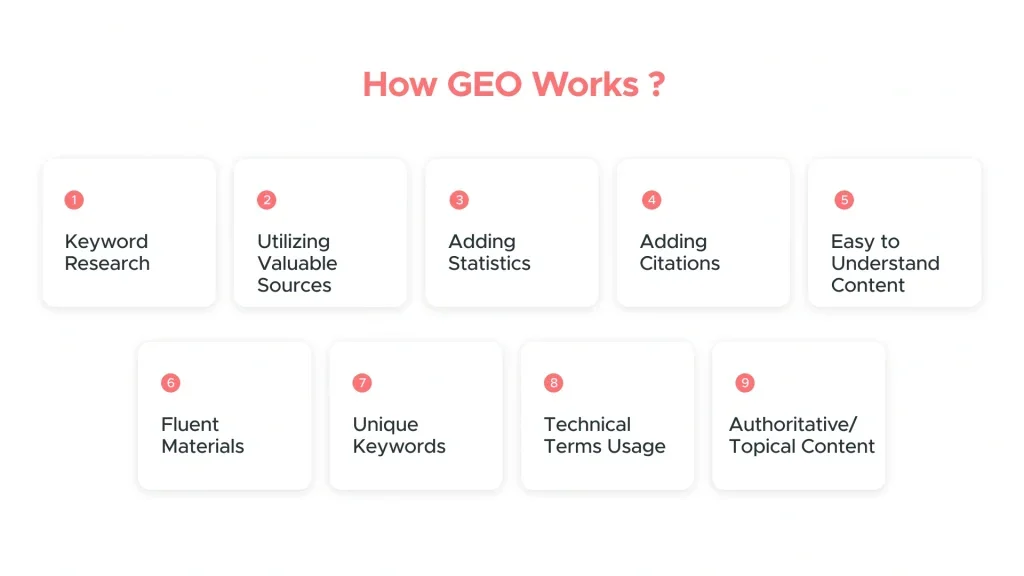
AI engines don’t “rank” websites in the traditional sense; they use a framework called RAG (Retrieval-Augmented Generation) to find information. First, the AI “retrieves” the most relevant facts from the live web, and then it “generates” a natural language summary for the user.
To win at What is GEO, your content must be easy for an AI to “scrape” and “understand” instantly. This is why structured data, such as JSON-LD schema, has become more important than almost any other technical factor. Your brand’s authority is now measured by how often you are mentioned alongside other trusted entities in your industry.
“In 2026, being cited by an AI is the new #1 ranking. It provides a level of pre-validated trust that a simple link can never achieve.” — SEO Industry Expert, 2026.
How to Optimize Content for GEO Citations
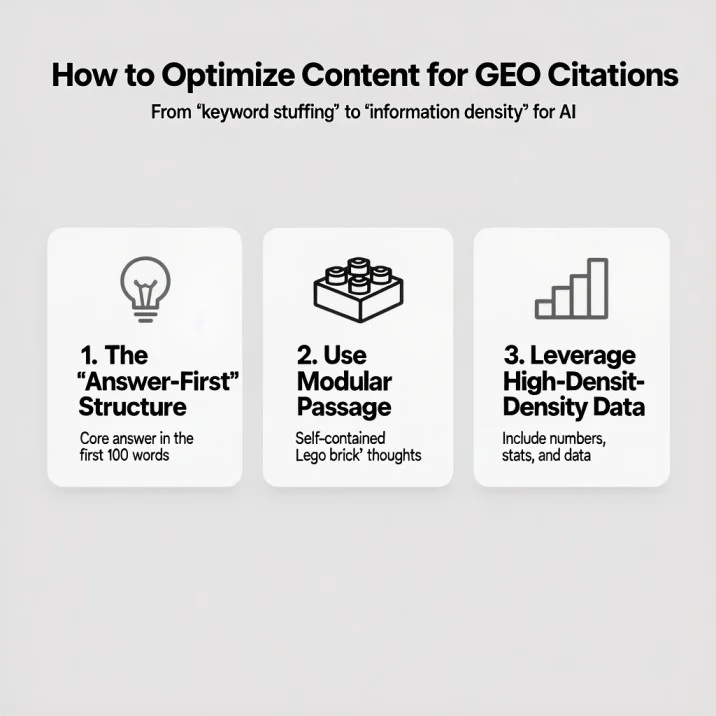
To get cited by AI models, you must move away from “keyword stuffing” and toward “information density.” AI models prefer content that provides direct, factual answers without unnecessary fluff or corporate jargon. Here are the three pillars of GEO optimization that every professional blogger must follow.
1. The “Answer-First” Content Structure
Always provide the core answer to the user’s query within the first 100 words of your article or section. AI engines like Perplexity often extract the first few sentences of a relevant paragraph to build their response. If your answer is buried at the bottom of a 2,000-word post, the AI will likely skip you for a more concise competitor.
2. Use Modular Passage Design
Think of your blog post as a collection of “Lego bricks” rather than a single long story. Each subheading should contain a complete, self-contained thought that makes sense even if read in isolation. This allows AI “crawlers” to pick up specific snippets of your content to answer niche long-tail queries.
3. Leverage High-Density Data Points
AI models love numbers, statistics, and concrete data because they are easy to verify. Including unique research, pricing tables, or “by-the-numbers” case studies increases your citation probability by up to 40%. When an AI sees a specific fact on your site, it views you as a primary source rather than a secondary commentator.

Essential GEO Strategies for 2026
- Target Conversational Intent: Optimize for “How do I…” or “What is the best way to…” rather than just “SEO tips.”
- Build Entity Authority: Ensure your brand is mentioned on Reddit, Quora, and industry news sites to build a “knowledge graph” around your name.
- Optimize for Zero-Click: Focus on getting your brand name into the AI’s summary so users recognize you even if they don’t click.
- Use Advanced Schema: Implement
FAQPage,HowTo, andOrganizationschema to give AI bots a clear roadmap of your data.
The Role of E-E-A-T in Generative Search
Google’s E-E-A-T (Experience, Expertise, Authoritativeness, and Trustworthiness) is now the “misinformation filter” for AI. Since AI models are prone to “hallucinations,” they prioritize sources that have a proven track record of accuracy and human oversight.
To improve your What is GEO score, you must show “Proof of Experience.” This means including original photos, first-hand accounts, and expert bios that prove a human professional wrote the content. AI models are getting better at detecting generic, AI-generated “filler,” so authentic human perspective is your biggest competitive advantage in 2026.
Why User Sentiment Matters for GEO
AI models aren’t just looking for facts; they are looking for reputation. If your brand has thousands of positive reviews on third-party sites, AI models like Gemini will be more likely to recommend you. Social sentiment from platforms like X (formerly Twitter) and LinkedIn now feeds directly into how AI perceives your brand’s trustworthiness.
Technical Requirements for GEO Success
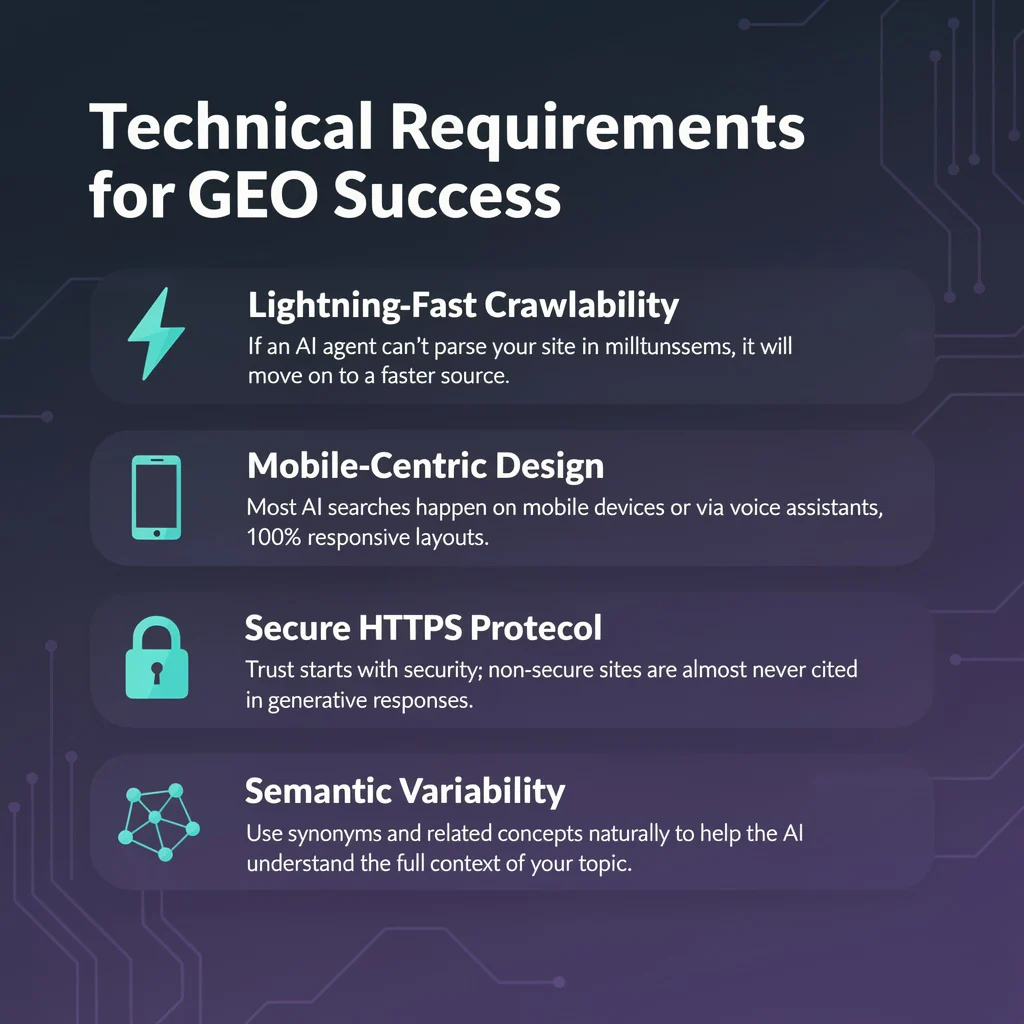
- Lightning-Fast Crawlability: If an AI agent can’t parse your site in milliseconds, it will move on to a faster source.
- Mobile-Centric Design: Most AI searches happen on mobile devices or via voice assistants, requiring 100% responsive layouts.
- Secure HTTPS Protocol: Trust starts with security; non-secure sites are almost never cited in generative responses.
- Semantic Variability: Use synonyms and related concepts naturally to help the AI understand the full context of your topic.
People Also Ask: GEO and SEO FAQs
Does GEO replace traditional SEO?
No, GEO is an evolution of SEO. You still need a fast site and quality links to rank in Google, but you need GEO to appear in the AI summaries that now sit at the top of the search results.
How do I measure GEO success?
Instead of just tracking keyword rankings, you should track your “Citation Share” or “Answer Inclusion Rate.” Tools like Semrush and Ahrefs now offer AI visibility reports that show how often your brand is cited in LLM responses.
Is long-form content still relevant for GEO?
Yes, but only if it is “signal-rich.” AI models prefer deep, comprehensive guides (1,500–3,000 words) that cover a topic from every angle, as this establishes you as a topical authority.
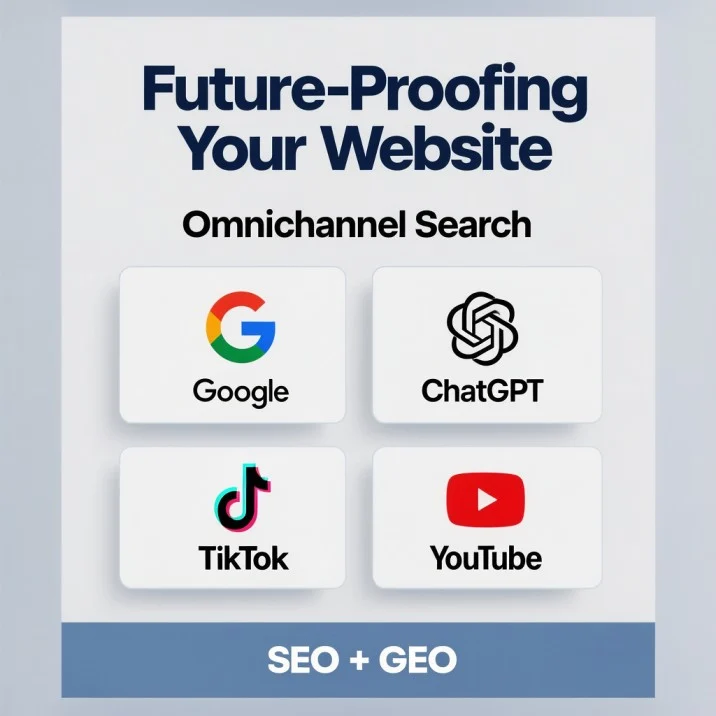
Future-Proofing Your Website for 2026 and Beyond
The brands that win in the next decade will be those that embrace the “Omnichannel Search” reality. This means your content should be optimized for Google, ChatGPT, TikTok, and YouTube simultaneously. By focusing on What is GEO, you are building a digital footprint that is resilient to algorithm changes and technological shifts.
Your goal should be to become an “Entity” that search engines can’t ignore. This involves consistent publishing, active community engagement, and a relentless focus on providing the best possible answer to every user query. When you combine the technical precision of SEO with the conversational intelligence of GEO, you create an unstoppable marketing machine.
Conclusion: Your Next Steps in the AI Era
The transition from SEO to GEO represents the most significant change in digital marketing since the invention of the search engine itself. By following the strategies outlined in this 2026 guide, you can ensure your website remains at the top of the search rankings—and at the center of the AI conversation.









Leave a Comment