Search Engine Optimization, or SEO, is the practice of enhancing your website to increase its visibility in search engine results. For beginners developing their first SEO strategy, the world of search can feel like a labyrinth of technical jargon and shifting goalposts. However, the core SEO basics remain consistent: search engines want to provide the best possible answer to a user’s question.
In this guide, we will break down the essential SEO strategy you need to follow to rank your content, attract organic traffic, and grow your digital presence using modern SEO best practices and basics.
Part 1: Understanding the Modern SEO Landscape
Before diving into tactics, it is vital for beginners to understand that search engines like Google have evolved. The latest algorithms prioritize EEAT (Experience, Expertise, Authoritativeness, and Trustworthiness) and User Intent. A successful SEO strategy is no longer about “tricking” a system; it is about proving to the system that you are the most helpful resource available. Understanding these SEO basics is the first step toward long-term success for all beginners.
Why SEO is the Foundation of Your Strategy
Unlike social media or paid advertising, where visibility disappears the moment you stop paying or posting, an SEO-focused strategy creates a “compounding interest” effect. High-quality content that ranks well brings in free, targeted traffic month after month without additional cost, which is why mastering the SEO basics is so lucrative for beginners starting their first strategy.
Part 2: The Core Pillars of SEO for Beginners
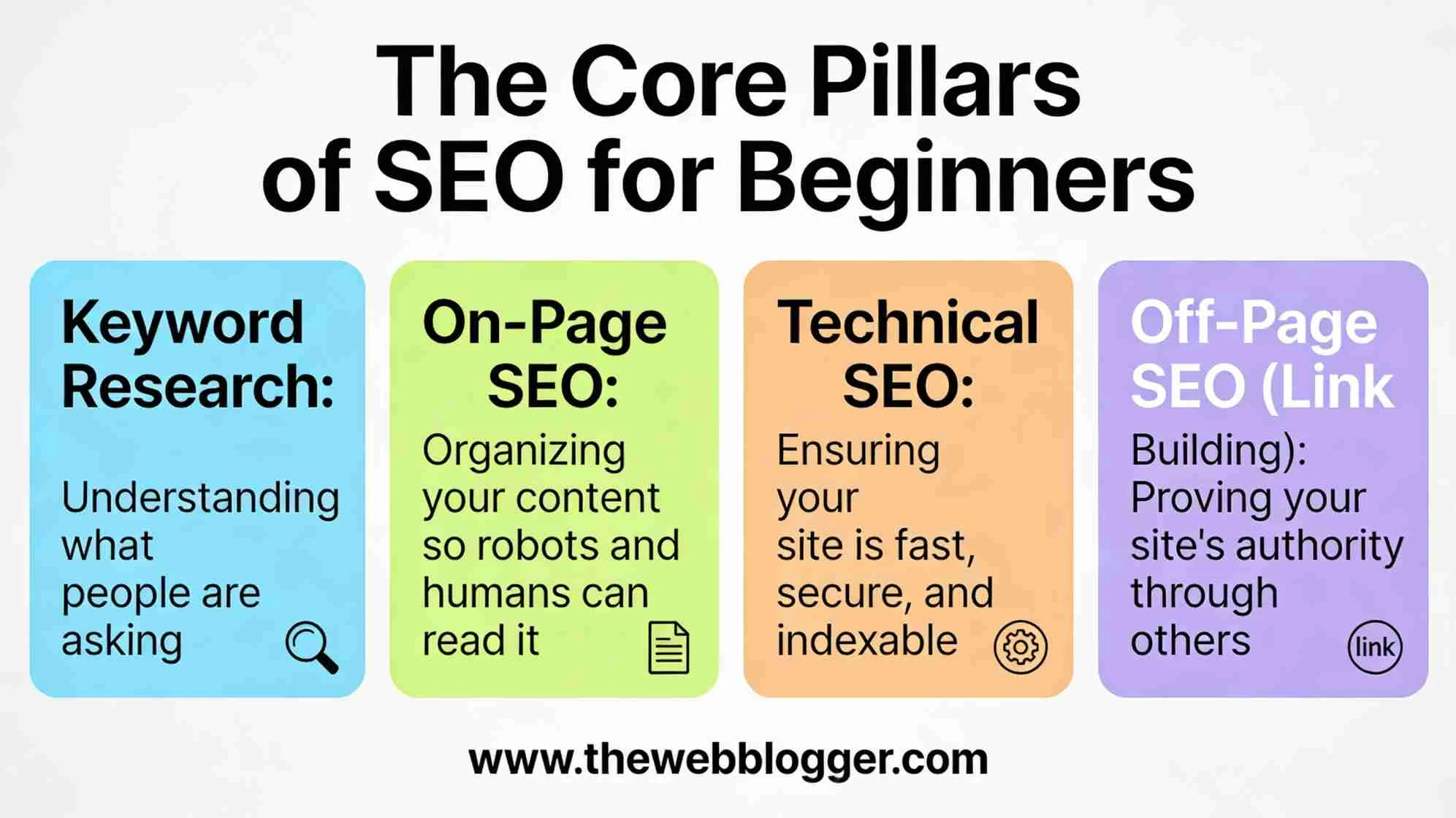
To succeed in your SEO efforts, you must master four distinct areas of optimization as part of your overall SEO strategy:
- Keyword Research: Understanding what people are asking.
- On-Page SEO: Organizing your content so robots and humans can read it.
- Technical SEO: Ensuring your site is fast, secure, and indexable.
- Off-Page SEO (Link Building): Proving your site’s authority through others.
By focusing on these four basics, beginners can build a site and an SEO strategy that stands the test of time.
Part 3: Keyword Research – Finding Your Voice
The first step in any SEO journey is identifying the terms your potential audience uses. This process is called keyword research and is a fundamental part of the SEO strategy for beginners to learn the basics.
Search Intent: The “Why” Behind the Query
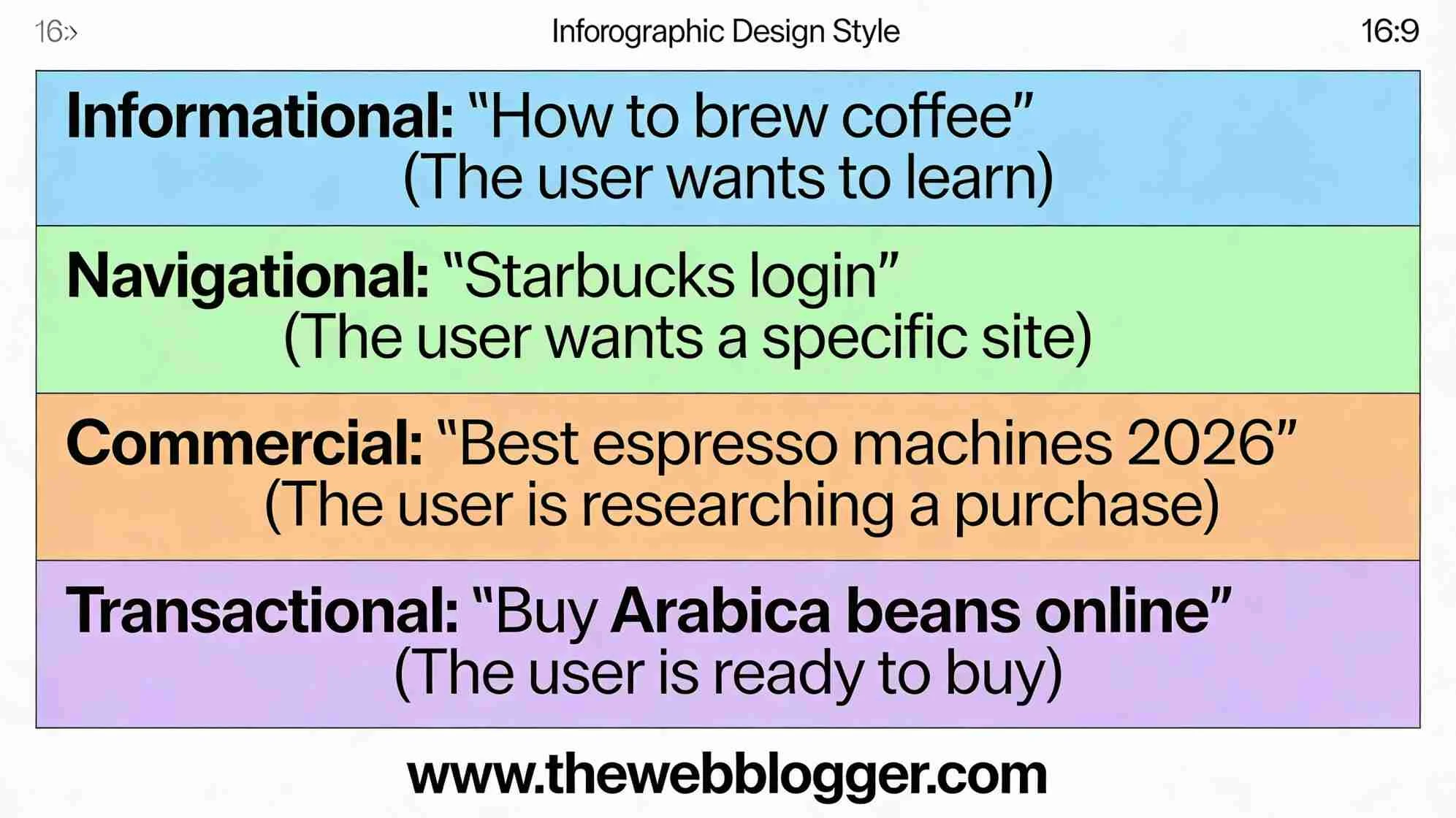
Modern SEO algorithms care more about the intent of a search than the specific words. There are four main types of intent that beginners should include in their SEO strategy:
- Informational: “How to do SEO” (The user wants to learn).
- Navigational: “thewebblogger login” (The user wants a specific site).
- Commercial: “Best SEO blogs of 2026″ (The user is researching).
- Transactional: “Buy thewebblogger one year plan online” (The user is ready to buy).
The Beginner Strategy: Focus on “Long-Tail Keywords.” Instead of trying to rank for a broad term like “Coffee,” a better SEO strategy is to aim for “How to make pour-over coffee at home for beginners.” These terms are the basics of finding low-competition, high-conversion traffic for any SEO strategy.
Part 4: Quality Content – Satisfying the User
Content is the heart of your SEO strategy. Google’s latest updates emphasize “Helpful Content.” To rank well and master the SEO basics, your content must be:
- Original: Don’t just regurgitate what is already on page one.
- Comprehensive: Answer the user’s question thoroughly for your SEO strategy.
- Human-Centric: Even in an SEO strategy, write for people first. Avoid “keyword stuffing”—the practice of repeating a word until the text sounds robotic, a mistake many beginners make when learning the basics.
Above the Fold Optimization
The “fold” is the part of the screen users see before they start scrolling. To reduce your “bounce rate,” ensure your main SEO keyword and a clear value proposition are visible right away. This is one of the essential SEO basics for beginners implementing a new strategy.
Part 5: On-Page SEO Basics
Once you have your content, you need to use “tags” to tell search engines what the page is about. These basics are critical for any beginners looking to see results from their SEO strategy.
Title Tags and Meta Descriptions
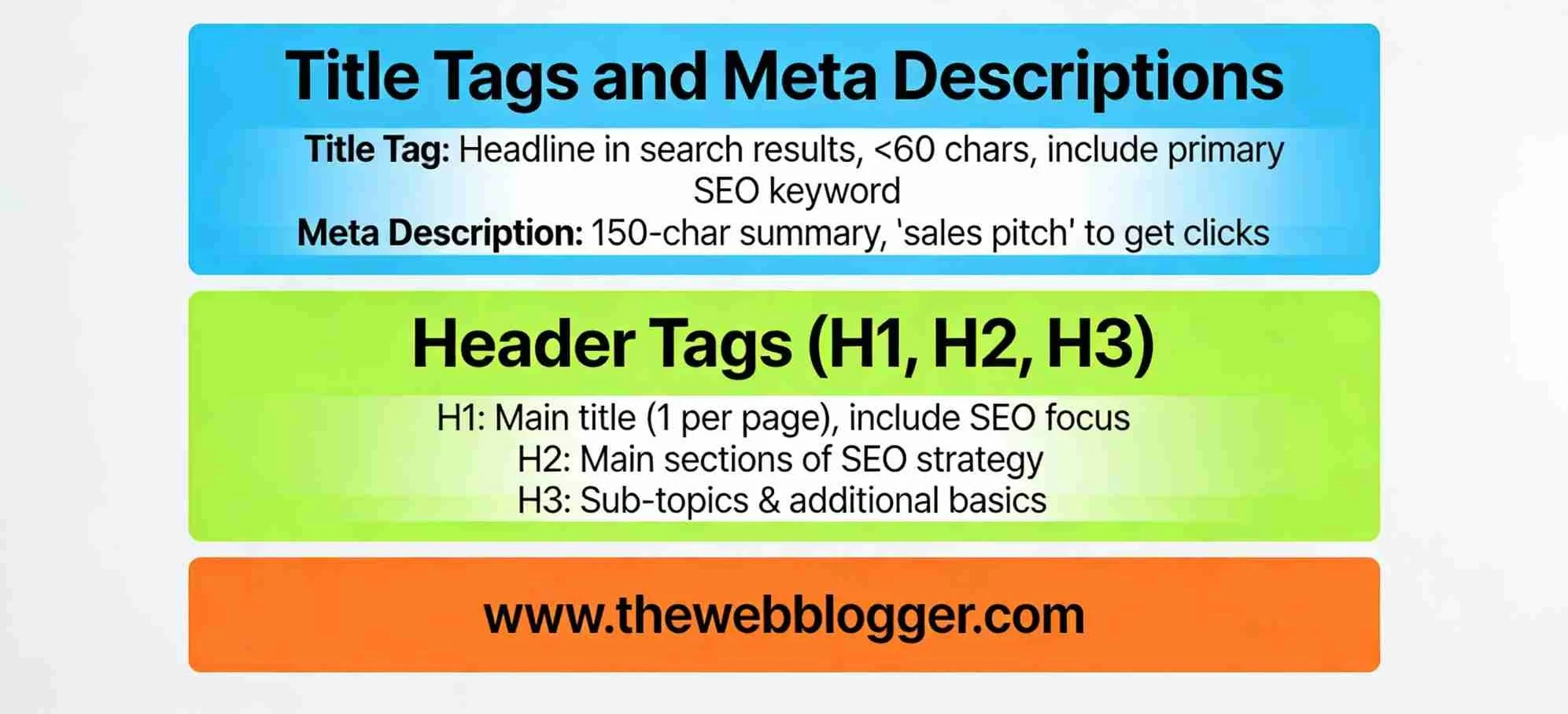
- Title Tag: This is the headline in search results. Keep it under 60 characters and include your primary SEO keyword as part of your basics.
- Meta Description: This is the 150-character summary. While not a direct ranking factor in your SEO strategy, it is your “sales pitch” to get users to click, which is vital for beginners.
Header Tags (H1, H2, H3)
Think of headers like a table of contents, a vital part of the SEO basics of structure for beginners.
- H1: The main title (only one per page) including your SEO focus.
- H2: Main sections of your SEO strategy.
- H3: Sub-topics and additional basics.
Image Optimization
Search engines cannot “see” images. You must use Alt Text to describe the image. This is a core SEO practice and one of the basics that helps with accessibility for all beginners.
Part 6: Technical SEO – The Engine Under the Hood
If your site is slow or broken, even the best SEO strategy won’t rank. Beginners often overlook these technical basics.
Crawling and Indexing
Google uses “Spiders” to crawl the web. You must ensure your site is “Indexable” for your SEO strategy to work.
- Sitemaps: Use a tool like Google Search Console to submit an XML sitemap.
- Robots.txt: Ensure you aren’t accidentally “disallowing” Google from seeing your pages, one of the basics of technical SEO.
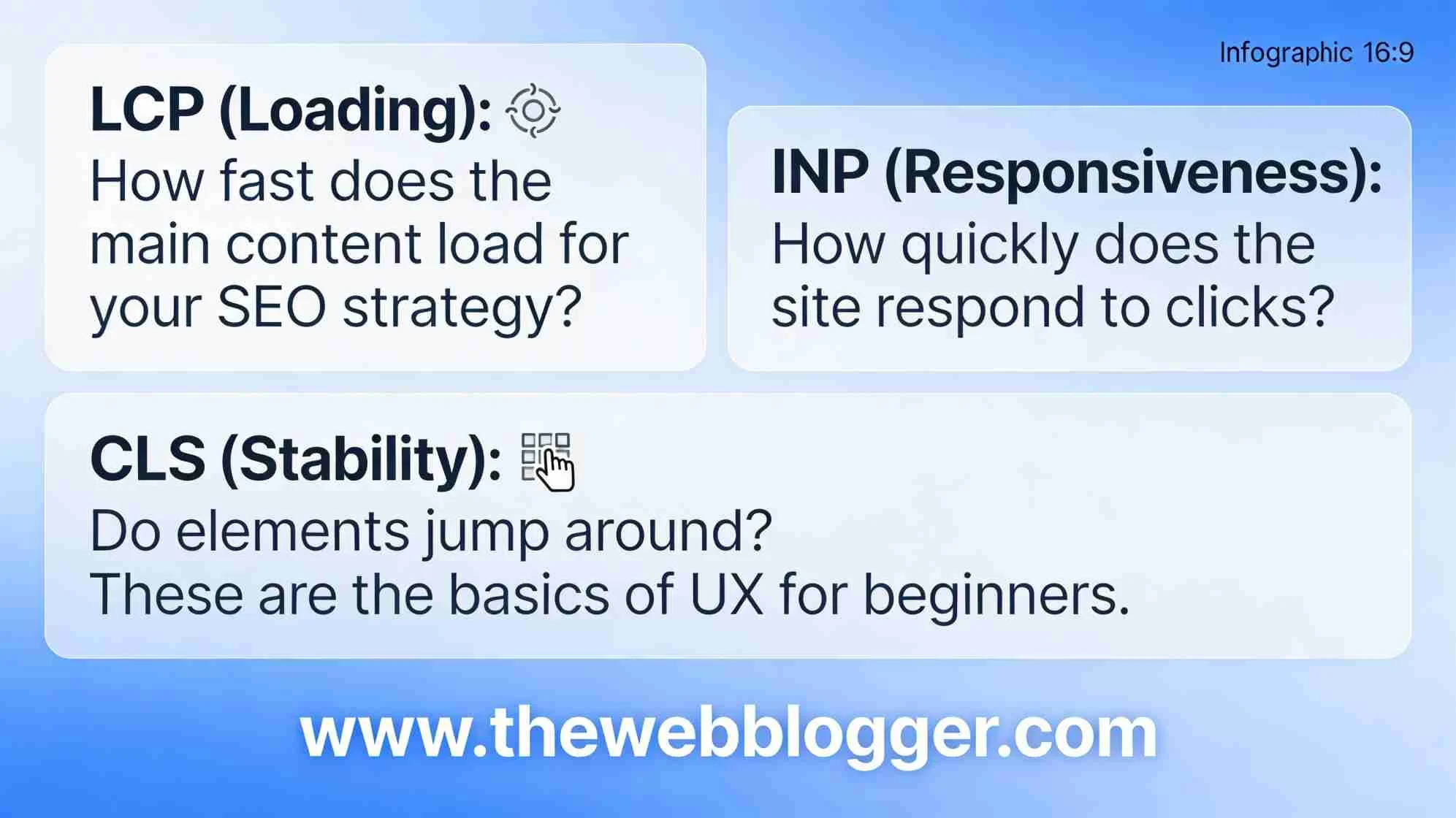
Core Web Vitals
This is a set of metrics Google uses to measure user experience within its SEO framework:
- LCP (Loading): How fast does the main content load for your SEO strategy?
- INP (Responsiveness): How quickly does the site respond to clicks?
- CLS (Stability): Do elements jump around? These are the basics of UX for beginners.
Part 7: Off-Page SEO – Building Authority
A backlink is a link from another website to yours. In any SEO strategy, Google views these as “votes of confidence” and part of your authority basics.
How to Earn Links Ethically
- Digital PR: Reach out to journalists with unique data for your SEO strategy.
- Broken Link Building: Find a dead link and suggest your content as a replacement.
- Relationship Building: Network with others in your niche to improve SEO.
These basics of link building are essential for beginners to increase their site’s authority in their SEO strategy.
Part 8: Mobile-First Strategy
Most web traffic now happens on mobile devices. Google now uses Mobile-First Indexing as part of its SEO basics, meaning it looks at the mobile version of your site to determine rankings. A mobile-friendly SEO strategy includes:
- Ensuring buttons are easy to tap for beginners.
- Ensuring text is large enough to read without zooming, a key part of SEO basics.
- Avoiding intrusive pop-ups that hurt your SEO strategy.
Part 9: Measuring Success
You cannot improve your SEO strategy if you do not measure it. For beginners, these are the most important basics and metrics:
- Organic Traffic: How many people are coming from search via SEO?
- Keyword Rankings: Where do you sit on the results page for your SEO strategy?
- Engagement Rate: Are people actually reading your content?
- Conversions: Are people taking the action you want?
Summary: Your SEO Checklist
To wrap up this SEO strategy, beginners should follow these basics:
- [ ] Set up Google Search Console and Google Analytics for your SEO.
- [ ] Identify 5-10 long-tail keywords relevant to your SEO strategy.
- [ ] Write a “pillar post” using SEO basics that is more helpful than anything else.
- [ ] Optimize your H1, Title Tags, and Meta Descriptions for SEO.
- [ ] Check your site speed and mobile responsiveness for your strategy.
- [ ] Reach out to one partner or blogger to share your SEO content.
SEO is a marathon, not a sprint. By focusing on these basics and a consistent SEO strategy, beginners will build a sustainable source of traffic that serves your brand for years to come.











Leave a Comment