In the digital age, where information is just a click away, search engines play a pivotal role in connecting users with the content they seek. Google, MSN (now known as Bing), Yahoo, and Bing are among the giants in the search engine industry, each with its unique characteristics and user base. Understanding the metrics and search volume of these search engines is essential for businesses and content creators to optimize their online presence. In this blog post, we’ll delve into an in-depth analysis of Google, MSN (Bing), Yahoo, and Bing, exploring their respective traffic metrics and search volume.
Google: The Search Engine Behemoth
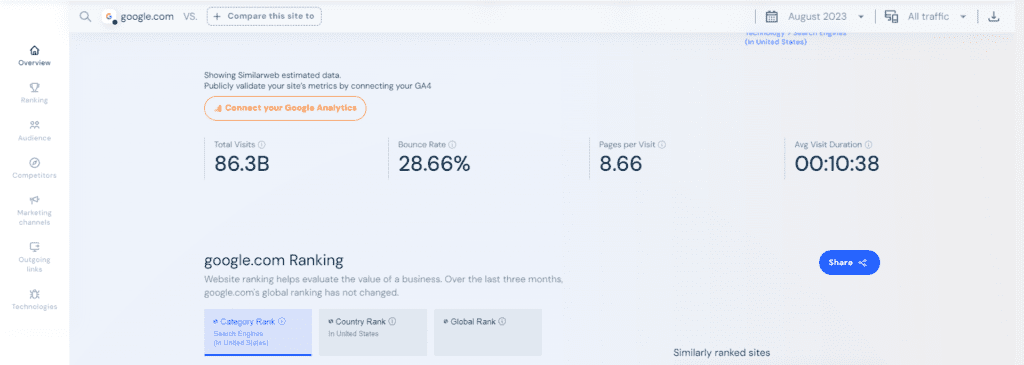
- Search Volume: Google dominates the search engine market with a staggering search volume. As of my last update in September 2023, Google accounted for over 90% of the global search engine market share, processing more than 86 billion searches per month. This vast user base makes it the go-to platform for businesses and content creators looking to reach a wide audience.
- Metrics: Google provides a range of metrics through its Google Analytics and Google Search Console tools. These metrics include:
- Organic Search Traffic: The number of visitors who reach a website through Google’s organic search results.
- Click-Through Rate (CTR): The percentage of users who click on a website’s link after seeing it in the search results.
- Average Position: The ranking of a website’s pages in Google’s search results.
- Impressions: The number of times a website’s link is displayed in search results.
- Conversion Rate: The percentage of visitors who complete a desired action on the website, such as making a purchase or filling out a form.
MSN (Bing): The Challenger
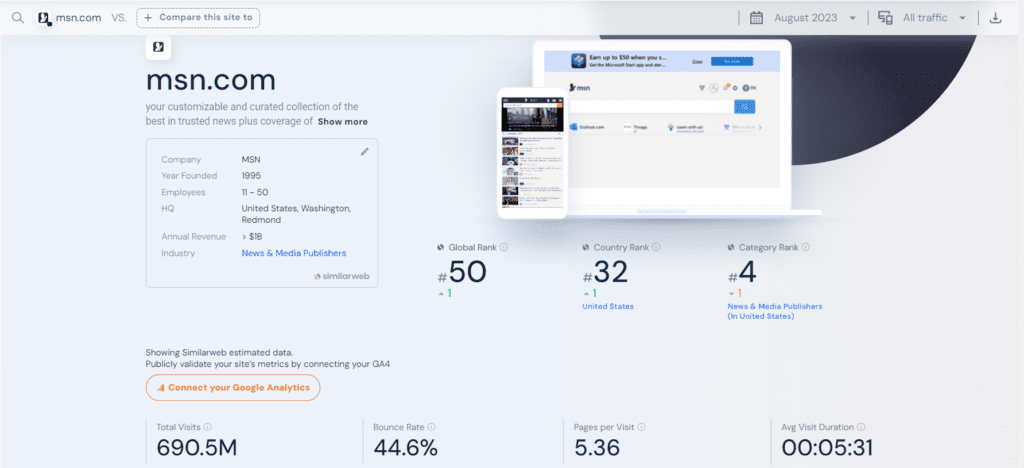
- Search Volume: While Microsoft’s Bing may not rival Google in search volume, it still commands a significant share of the market. As of 2023, Bing had around 6% of the global search engine market share, processing more than 690 Million searches per month. This user base makes it a valuable platform for businesses aiming to diversify their search engine optimization (SEO) efforts.
- Metrics: Bing offers webmasters access to Bing Webmaster Tools, which provides several metrics similar to Google’s offerings:
- Organic Search Traffic: The number of visitors who reach a website through Bing’s organic search results.
- Click-Through Rate (CTR): The percentage of users who click on a website’s link in Bing’s search results.
- Average Position: The ranking of a website’s pages in Bing’s search results.
- Impressions: The number of times a website’s link is displayed in Bing’s search results.
- Conversion Rate: The percentage of visitors who complete desired actions on the website.
Yahoo: The Legacy Engine
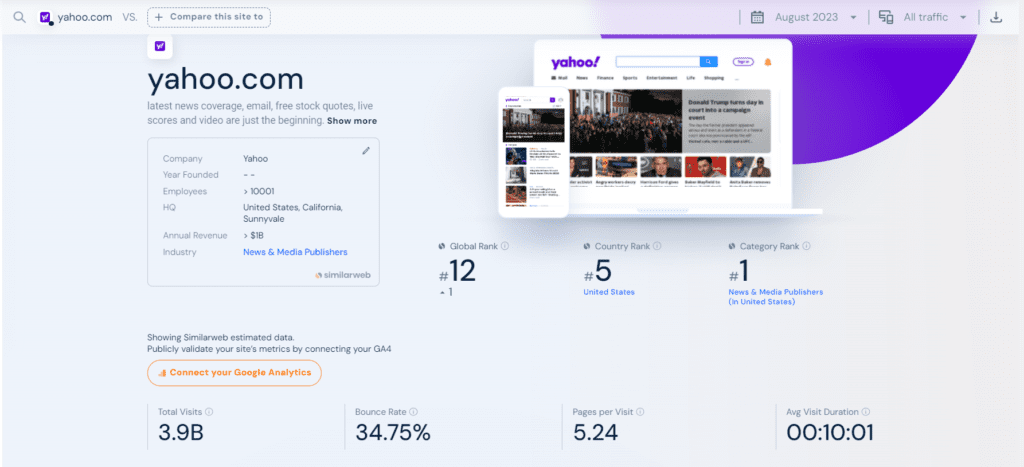
- Search Volume: Yahoo, once a dominant player in the search engine space, has seen its market share decline significantly over the years. In 2023, it accounted for less than 1% of the global search engine market share. Despite this, Yahoo still processes millions of searches each day, making it a niche platform for certain demographics.
- Metrics: Yahoo Search does provide some analytics tools for webmasters, although they are not as extensive as Google’s or Bing’s offerings. These metrics typically cover:
- Organic Search Traffic: The number of visitors who reach a website through Yahoo’s organic search results.
- Click-Through Rate (CTR): The percentage of users who click on a website’s link in Yahoo’s search results.
- Average Position: The ranking of a website’s pages in Yahoo’s search results.
- Impressions: The number of times a website’s link is displayed in Yahoo’s search results.
Bing: Microsoft’s Revamped Search Engine

- Search Volume: Bing, formerly known as MSN Search, has undergone significant rebranding and improvements over the years. As of 2023, Bing accounted for approximately 6% of the global search engine market share, processing billions of searches each month. Its integration with Microsoft products and services provides a unique user base.
- Metrics: Bing Webmaster Tools offers similar metrics to Google and Bing:
- Organic Search Traffic: The number of visitors who reach a website through Bing’s organic search results.
- Click-Through Rate (CTR): The percentage of users who click on a website’s link in Bing’s search results.
- Average Position: The ranking of a website’s pages in Bing’s search results.
- Impressions: The number of times a website’s link is displayed in Bing’s search results.
- Conversion Rate: The percentage of visitors who complete desired actions on the website.
Comparison of Metrics and Search Volume
Now that we’ve explored the metrics and search volume of these search engines, let’s compare them to help businesses and content creators make informed decisions:
- Google vs. Bing (MSN):
- Google has the highest search volume by far, making it essential for reaching a vast audience.
- Bing, with its integration into Microsoft products, can be valuable for businesses targeting specific demographics or niches.
- Google’s metrics are more extensive and offer detailed insights into user behavior.
- Bing (MSN) vs. Yahoo:
- Bing surpasses Yahoo in search volume and provides more comprehensive metrics.
- Yahoo, while having a smaller user base, can still be relevant for specific audiences.
- Google vs. Yahoo:
- Google significantly outperforms Yahoo in both search volume and analytics offerings.
- Yahoo may have niche relevance but lacks the scale of Google.
Conclusion
In the ever-evolving world of search engines, understanding the metrics and search volume of Google, Bing (MSN), Yahoo, and Bing is crucial for businesses and content creators. Google remains the undisputed leader with the highest search volume and comprehensive analytics tools. Bing, bolstered by its Microsoft integration, offers a viable alternative, while Yahoo, though diminished in prominence, can still serve specific demographics. As these platforms continue to evolve, staying informed and adapting your digital strategy accordingly will be key to online success.










Leave a Comment